Awad Shihadeh Mahli
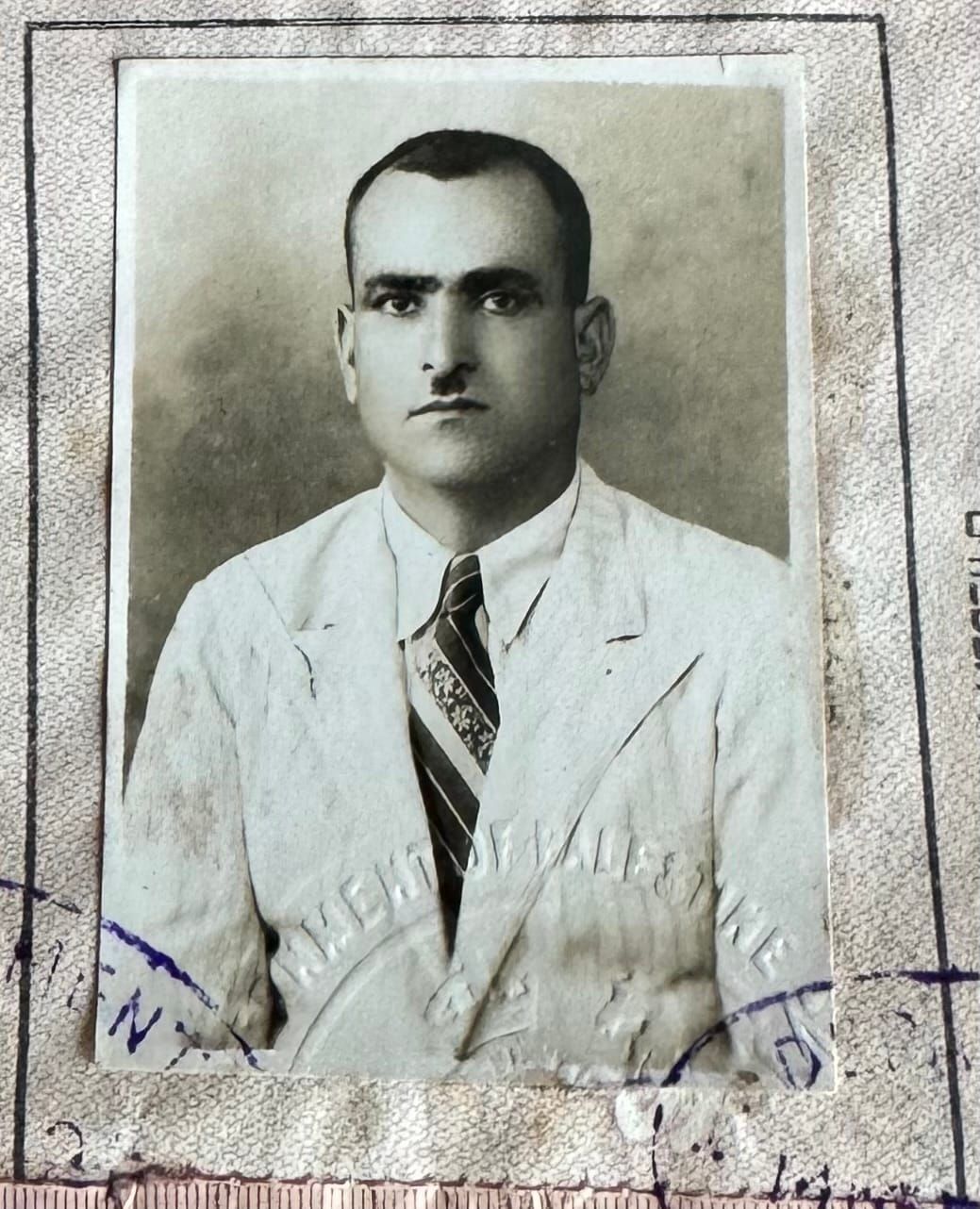
What must your life have been like?
Awad, son of Shihadeh and Hana Mahli. Brother of Thurayyeh. The youngest. I know what it’s like to be the youngest, for sure. One thing we have in common, Jiddo. But what about the rest?
How old were you when your mother died? The baby of the family is always the closest to their mother; I know what that’s like, too. What was it like to lose her? Was her death sudden, did you come home from playing one day to find her gone? Or did you have to watch her slip away, bit by bit? Did you have to sit by a bedside and watch her die, while she looked longingly at the little boy she would never see grow into a man? While she caressed your face and hair, as if gathering those few pleasures of motherhood with her into the next life? Did it feel like a loss to you when it happened, or was it unreal, a reality so unlike any you’d known and so difficult to absorb? Did you go to a funeral? The right order at the wrong time: a son burying his mother, but far too soon.
Did you find her dressing gown, hanging behind her bedroom door, grasp it in your hands and sniff it, for the remnants of her scent? For the last traces of her, whatever you could gather?
What was it like to be left behind by your own father? To be cast aside, like flotsam after a disaster? Left floating on an ocean? What was it like to spend time in an orphanage, one of many orphans? In an orphanage, even with your sister, you would have been separated. And then to be claimed, again, by those not your kin?
What was it like to feel that break in your patrimony? To feel your patrilineage sever itself from you, no sense of lineage or obligation or responsibility to you? And then to have to carry the Mahli name with you, like a scar or a birth mark you could never erase? Mahli, son of Shihadeh, cast off into the wilderness to fend for myself.
You did pretty well for yourself, considering the lack of education or support. You became a driver, you found a job driving for IPC. Reliable, steady work. Work that allowed you to explore, to leave your home and see other places, maybe not in the way of an explorer, but more than you might have imagined. It gave you a freedom you’d never possessed, perhaps the sense that you’d be able to survive whatever came next.
Could anyone have predicted what came next? Did you see it coming? Were preparations already being made? I know you were home, perhaps not your usual schedule, but a precaution. My father describes you turning on the kerosene stove to block out the sound of bombs as Zionist gangs terrorized Haifa, an image that is vivid with the instinct to protect and to soothe.
What could have been going through your head, Jiddo? The protective instincts of a father, who himself had lost that protection. It makes your sacrifices and your devotion even more remarkable. Your granddaughter can see this, from decades removed. What a kind and upstanding person you were, loyal and responsible. What a good husband you were. What a wonderful father you were.
You worked so hard to care for your family. When my father breaks down, describing how it was your sacrifice that allowed him to attend the best schools, where he learned English—well enough to write to his sister—and how proud he knew that made you, I see the lineage from you through to this moment. To the sacrifices my own father has made for his children, to educate us, to care for us, to enable us a freedom he never had.
No parent is ever perfect: your children come to you without instructions. You have to learn how to parent them as the people they are, individual souls who come through you, with their own reasons and calling, connected but also separate from you. Your job is to love them in the ways that best allow them to rise into their purpose for being here, even if it means something you don’t understand, something you might not have chosen for yourself.
You give them life, but that life is theirs to live.