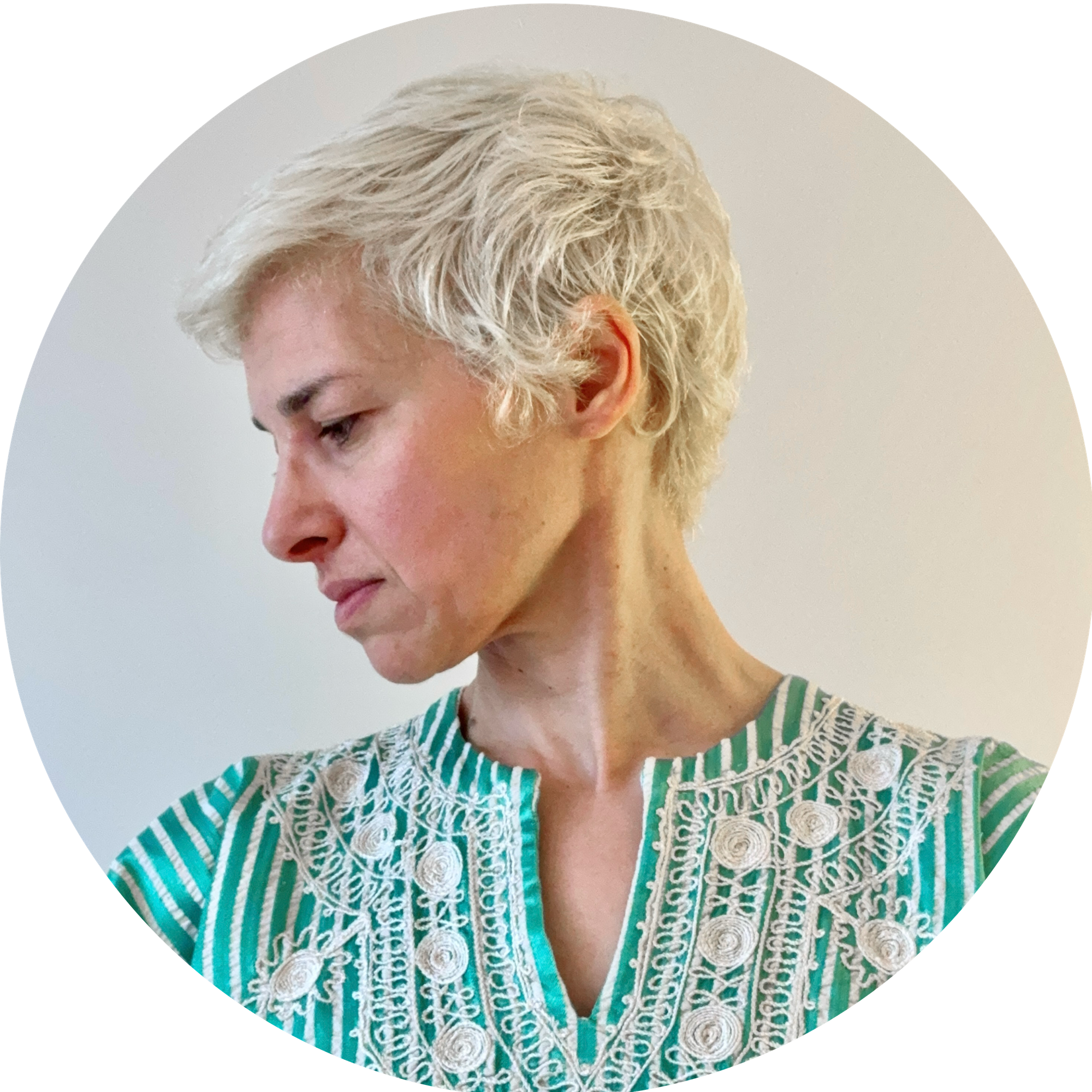
There are things I am trying not to think about.
And then, on this particular evening, a song appears in the algorithm. I don’t have it bookmarked. It’s one you sent me, when we first started messaging one another and we shared music we liked. I’d never heard of shaabi music; you sent me a Dahmane El Harachi song, Ya Rayah. Tonight, I let it play. All of the lyrics are there in the transcript, in Arabic; I feel a sudden compulsion to understand their meaning. I screencap a random lyric, and copy-paste it into the translation app on my phone, which I know is shitty at translation, but for my insufficient Arabic it’s all I have. It returns something that stops me in my tracks:
Why is your heart sad, and why are you like this?
This song reawakens a longing I’ve carried for decades. Lately, I’ve felt it rise from within my heart with greater urgency: something I don’t know how to reach. I hear the men on the track singing, and it reminds me of a gathering. This is one I witnessed, though I wasn’t alive to attend it: the engagement party of my aunt Selwa, the dearest of my aunts to me. I was made to feel that I was her doppelgänger, made to fill the separation between my mother and her, which was due to distance not estrangement. My aunt was unquestionably beautiful—she was a Syrian-Turkish goddess. She had the gamine looks of Audrey Hepburn, but she was unarguably more beautiful; she was magical.
I cannot possibly describe how beautiful she was to me.
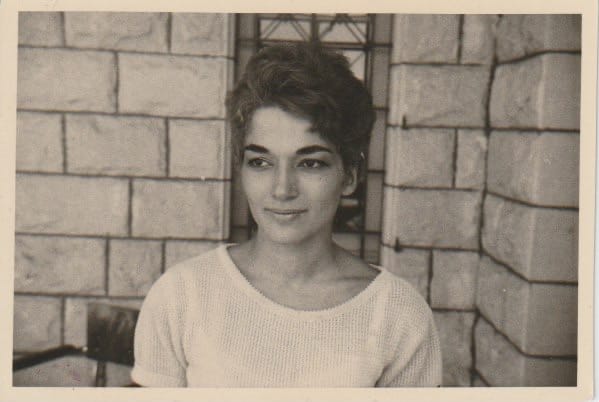
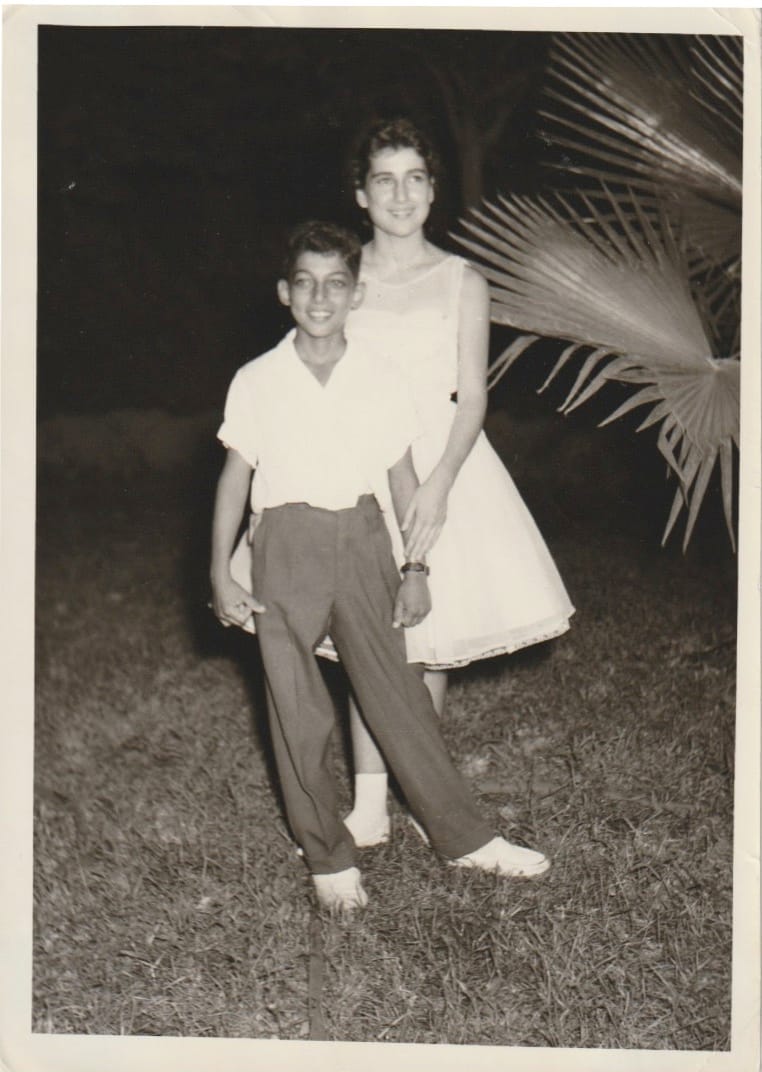
In high school, I convinced my khalo Kanan to pass on a trove of 8mm films, disorganized and unlabelled, the only remaining filmed record of my mother’s family. Swimming on the Bosphorous. Walking around my grandparents’ Aleppian garden. My aunts as teenagers playing dressup. And my aunt Selwa’s engagement party, circa 1957. I’d seen stills of this event: my aunt’s eyes cast downward, bashful at 17, the bride everyone was there to celebrate. My mother in that awkward transition from a girlish 12 to a young lady of 13, with her youngest sibling—the very uncle from whom I had retrieved these films—beside her, maybe 9 or 10. Wearing their best clothes, beaming. The two of them the last young ones of a family of six, my mother reaching her arm out to guide her brother, the protective abla.
Only a few years later my mother would depart Syria permanently, never to return.
There is a scene in this silent film where it’s clear that the family has reached the part of the evening where the music is playing, and the males in the Hariri clan have started to sing. Someone is swinging a handkerchief like they’re about to break into dabke. Perhaps it’s some kind of traditional folk song that would have made its way into popular music, and might be about love; the dancing and the singing are in full sway, the sign of peak merriment.
I hear Ya Rayah tonight, with its chorus of male voices, and it inspires a vision of watching all of your family members—uncles, aunts, cousins, brothers—chiming in, serenading the whole family. The entire family in that moment held together with a song. This image conjures up a feeling I am missing: an innate knowledge of where you come from, absent of doubt. Because here are all these other people, who come from the same place, and their singing makes you feel that you are where you belong, part of your tribe.
The sole instance I witness this, I am in the AV room of my suburban Canadian high school, watching the film, taping it on a mini videocassette camera aimed at the screen. I am not simply watching, but guarding it, listening closely for the telltale sounds that the projector has started to scorch and then burn a hole in the precious film. The only remnant of my mother’s extended family that I have. Every burn might as well be a hole burned in my own skin, loss of my own flesh. That this will be repeated over and over again despite my best efforts to prevent it will make this whole reclamation and archiving effort akin to torture.
I can’t save anything without losing part of it.
Do I need to mention what it feels like to see a grandfather you’ve never met before? One you’ve heard all kinds of stories about? Stories that have turned him into more of a legend than your actual flesh-and-blood kin? Do I need to describe what it feels like to suddenly absorb the ache of disconnection between you and your jiddo Hariri—at this point 12 years deceased—as you watch him walk around, alive in a celluloid world, for the first and only time in your life? As if you could reach out and touch him? This grandfather, whose eyes you keep being told you inherited? Because not a single other person in your family—other than your mother’s younger brother—has that same colour?
Years later, there’s a school photo of yourself age four that’s pinned to your fridge—smiling in pigtails and a white turtleneck under a red corduroy jumper—from a time when your smiles were disconnected from the daily reality of your life, a habit you continued. You turn this photo over; it was the one your mother had sent to your grandmother because you recognize the handwritten inscription doesn’t she have some of my father’s features?
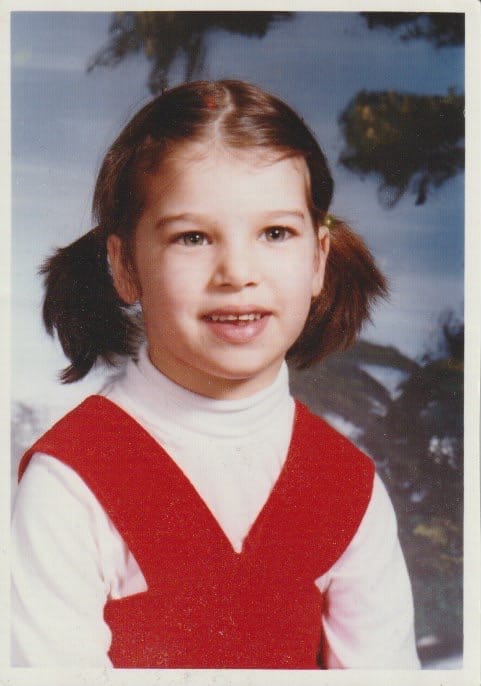
Years later you’ll read this and it will break you inside. You’ll wonder if he ever saw the photo. Did he know he had a granddaughter named Rafya. He died the same year the photo was taken, having lost the fortune he’d built through sheer will and near delusional self belief, of a kind you sometimes feel the glimmers of within you. You are his granddaughter, recognized or not; his genes are in there somewhere.
All this from one song? All this from one song.
Why is your heart sad and why are you like this? This is the exact question I’ve been asking myself for two years, for which I am still piecing together an answer. Lately it’s you I am trying not to think about. I’ve done a fairly decent job, but for the times when you intrude like a song rudely thrown into my way, like this evening. Sometimes I am able to imagine that something or someone else will replace you, and then I have moments of uncertainty. Could the particular feelings that you inspired—recognition, belonging—be found with someone better equipped to hold them. Someone more loving than fearful. Someone able to see their own insecurity in the statement intimacy, no strings, when what they really mean is, I’ll deny the inevitability of strings. I’ll pretend the strings never existed. I’ll drop them and run.
I forgive. But forgetting is not who I am. I don’t do forgetting. Did I forget to mention that?
I feel the slow tints of anger blurring my edges now. I used to hide my sorrow in anger, years ago, but I know I’m sad because I’ve mostly been sad for months. I think this is progress: at least I’m not using a false emotion to cover for the real one.
I know I’m sad because I feel the weight of everything I want to say bodily like a sickness; a child made to hold her tongue, who then becomes ill with the holding. I remember the discomfort of this feeling, why I used to exchange sorrow for anger. The sensitivity that turns celluloid into flesh. Now I sit with it, I hold the discomfort of it in each moment as it moves through me like a fever. I let the feeling speak to me, I listen to it intently.
If I think about it for too long, I’ll wonder if you used me to salve a hidden wound. Maybe I was doing the same. I’m not sure what it is you thought, but I also know I’m not responsible for any of it. I don’t mind if you know that you left a mark. Even if it’s one you’re not proud of making; it still belongs to you.
I am reading a book of Henry Miller and Anaïs Nin’s letters to one another. I am devouring it, but it also adds to the sorrow I feel: there is a way they belonged to one another, despite circumstances. The sort of connection I have longed for; someone who sees a hidden part within you, deeply felt and important, and is able to help you bring it out of yourself, even just by witnessing it. A spiritual kinship, something beyond obligatory reality.
Silence is a power I am slowly learning how to wield: to hold all this contained within me, to sublimate into instead of leak out. In time, I’ll get better at holding all of the people who’ve made marks on me, whether by their presence or absence; I’ll learn how to let them float, these phantoms, held aloft by the memories they’ll continue to spark. Available, but not throwing me off course. Just…there. Muses, guides.
Perhaps in the effort of seeking myself, of filling in the gaps of what is missing, I’ll restore the things that feel missing from all of those people, kin or kindred.